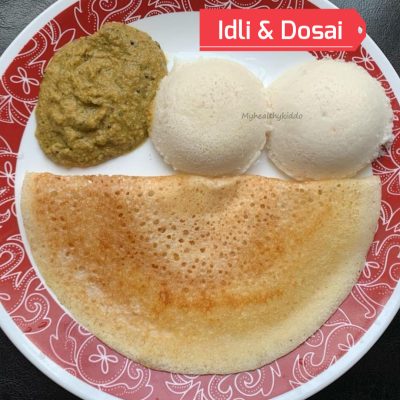
Idli batter recipe with tips in cold countries
Prep time
Cook time
Total time
Serves: 4 days
Ingredients
- Idli Rice - 4 cups to 5 cups (See notes at the end for details)
- Whole White Urad dal (Urad gota) - ¾ cup to 1 cup (See notes at the end for details)
- Poha/Aval - ½ to 1 cup (See notes at the end for details)
- Fenugreek/Methi seeds/Vendhayam - 1 tsp
- Rock salt - 2 tsp or as required
Instructions
Soaking:
- Wash and soak idli rice and methi seeds(need not wash) - separately, overnight (or 4 to 8 hrs).
- Wash and soak Urad dal (separately) for 1 to 2 hours. If required, you shall soak urad dal also (separately) when you are soaking rice.
- Wash and soak poha/aval (separately) for 1 to 2 hours. You shall soak urad dal and poha (separately) at the same time. Or else, you can soak all 4 ingredients(separately) at the same time.
- The soaking water level should be at least 2 to 3 inches above the ingredient-level as the ingredients bulge in the soaking process.
Grinding:
- To a grinder, add soaked fenugreek seeds along with fenugreek-soaked water. Close the lid and let it grind for 5 mins. You will get a fluffy batter.
- Then add soaked urad dal to the ground fenugreek seeds batter, adding little of the urad dal-soaked water. Let it grind for 5 mins.
- After 5 mins, add lil water, scrape the sides (using fingers or spatula) and add it to the center so that all dals are ground evenly. Add lil water whenever required (the batter shouldn’t be thin or tight). Use urad dal-soaked water and this water aids in fermentation too.
- Grind till it is nicely fluffy. It takes totally 20 mins for me in Premier wet grinder. Do not grind more than 30 mins in any grinder. Grinding urad dal longer will make the batter thinner.
- Transfer ground methi seeds+urad dal batter to a container.
- To the grinder, add soaked rice with a cup of soaked water. If urad dal-soaked water is over, start using rice-soaked water. Also add soaked poha/aval to it. Aval would have absorbed all the soaked water.
- Add water whenever required (the batter shouldn’t be too tight). Clean the sides once or twice using fingers or spatula, for even grinding.
- Do not grind it too smooth. Stop once it is nicely ground, but still you could feel slightly grainy when pressed between fingers. It takes 10 to 15 mins for me in Premier wet grinder. Do not grind more than 20 mins in any grinder.
- Transfer ground rice batter to the container containing methi seeds+urad dal batter. Wash the grinder with lil water and add to the batter. The batter should neither be too thick nor be runny.
- Add 2 tsp salt or as required. Mix well with hand. Do not use spatula or ladle to mix. Good bacteria in our hand is said to kick start the fermentation process.
Fermenting:
- Keep the batter closed inside grill oven (oven should be OFF) with light ON. Keep a large plate(I use my pizza pan) under the batter container to collect any spills.
- It takes 8 to 12 hours, depending upon the weather. Do not leave more than 14 hours in the oven. I usually grind in the night and keep the batter inside oven at 7 PM and take it out at 6 AM.
- Once it is fermented and raised up, mix it with a ladle and keep closed in refrigerator. You shall split in 2 containers and store in fridge, so that you shall keep one batch untouched until the first batch is over.
Idly:
- In an idly maker, add 2 to 3 cups of water. Close the idly maker and let the water come to a rolling boil.
- Take a cotton cloth, wet it in water and squeeze out the excess water. Put the damp cloth over idly plate and press slightly on the holes. If not using cloth, grease the idly plates(all holes) using sesame oil or ghee.
- Take a ladle full of batter and wipe out the excess batter at the bottom of the ladle against the container mouth.
- Pour a ladle of batter into each hole and stack the plates (only after the water in idli maker comes to a rolling boil). The corner holes in the upper stack should align with idli batter in the lower stack (I mean both upper and lower plate corner holes shouldn't be in straight line).
- Close and steam in idly maker for 10 to 12 mins.
- Mine cooks exactly in 11 mins. Open and make a hole in idly with wet finger or toothpick. If the finger/toothpick is clean without any stickiness, then idly is cooked well. Take out the cloth with idly or the plates (if not using cloth).
- Put the cloth with idly facing down in a plate. Drizzle some water over the cloth and gently take out the cloth. The idly will come out easily. If not using cloth, wait for 2 mins and then use a wet spoon and scoop out the idly. To take out each idly, wet the spoon every time. Having a bowl of water nearby to wet the spoon often will help.
- Serve hot with chutney and/or sambar. Store in hot box for later servings.
Dosa:
- You shall use the same batter after 2 days to make dosa.
- Take some batter in a separate bowl and add little water to make thick set dosa. Add more water to make crispy dosa. Mix well.
- The batter should be pourable but not runny.
- Heat dosa pan in medium heat.
- Grease dosa tawa with oil using onion or cotton cloth.
- Pour a ladle of batter in the centre and extend outward using wide-bottomed ladle. Go round and round from centre and make circles - small to big.
- Drizzle gingelly oil/ghee around and over dosa. I use gingelly oil to drizzle around and ghee to drizzle over the dosa.
- Once cooked one side, turn to the other side and cook till crisp.
Notes
1.Rice and urad dal ratio is dependent on the quality of urad dal. Urad dal that we use in Coimbatore (India) yields more batter and so we use 6:1 rice:urad dal ratio. But in US, I use 4:1 as urad dal doesn't yield more batter here. Laxmi and Costco urad dals yield good quantity and so you shall either go with 4:3/4 or 5:1 - both these ratios work well for me, and I add 5 cups rice, when I want more batter. Else, I go with 4:3/4 regularly.
2.If your idly is not fluffy (but flat), try to reduce fenugreek seeds from 1 tsp to ½ tsp. If your idly is too fluffy (and porous), reduce poha/aval from 1 cup to ½ cup.
3.Using fenugreek seeds and urad dal-soaked water to grind the batter is important for good fermentation.
4.Never store the batter with the ladle in it in the fridge as it will decrease the shelf-life of the batter.
5.Do not use a large container as more empty space will not aid good fermentation. Make sure your container is filled more than half with unfermented batter so that it rises well to fill the gap. If the gap is too much, then rising will be lesser.
6.If you are using cloth to make idly, once done, put those clothes immersed inside the remaining hot water in idly maker and let it soak until you are done with your breakfast/dinner. This soaking will make the cleaning easier.
7.Approximate water measurement for beginners: Soaking water is just 2 inches above each ingredient. Use ¼ cup water to soak fenugreek seeds and use it fully to grind it. If using ¾ cup urad dal, use 1+1/4 cup water to grind urad. If using 1 cup urad dal, use 1+1/2 cup water to grind urad. If using 4 cups rice, use 1+1/2 cup water to grind rice. If using 5 cups rice, use 2 cups water to grind rice. Finally, to rinse the grinder to collect all the stuck batter, use ½ cup water, add it to batter and mix well. Water measure might slightly vary (plus or minus), as per the quality of ingredients used.
8.Watch the video (at the end of this post) to see an important tip in making perfect idlis in both racks.
2.If your idly is not fluffy (but flat), try to reduce fenugreek seeds from 1 tsp to ½ tsp. If your idly is too fluffy (and porous), reduce poha/aval from 1 cup to ½ cup.
3.Using fenugreek seeds and urad dal-soaked water to grind the batter is important for good fermentation.
4.Never store the batter with the ladle in it in the fridge as it will decrease the shelf-life of the batter.
5.Do not use a large container as more empty space will not aid good fermentation. Make sure your container is filled more than half with unfermented batter so that it rises well to fill the gap. If the gap is too much, then rising will be lesser.
6.If you are using cloth to make idly, once done, put those clothes immersed inside the remaining hot water in idly maker and let it soak until you are done with your breakfast/dinner. This soaking will make the cleaning easier.
7.Approximate water measurement for beginners: Soaking water is just 2 inches above each ingredient. Use ¼ cup water to soak fenugreek seeds and use it fully to grind it. If using ¾ cup urad dal, use 1+1/4 cup water to grind urad. If using 1 cup urad dal, use 1+1/2 cup water to grind urad. If using 4 cups rice, use 1+1/2 cup water to grind rice. If using 5 cups rice, use 2 cups water to grind rice. Finally, to rinse the grinder to collect all the stuck batter, use ½ cup water, add it to batter and mix well. Water measure might slightly vary (plus or minus), as per the quality of ingredients used.
8.Watch the video (at the end of this post) to see an important tip in making perfect idlis in both racks.
Recipe by My Healthy Kiddo at https://www.myhealthykiddo.com/idly-batter-recipe-in-america/